
On a quiet afternoon, as Nerja's sun blazed over the cobblestone streets and the blue Mediterranean lay still, I had the chance to delve into Nerja's past through a book lent to me by our building's concierge. It was a fascinating read, almost like a time capsule, taking me back to Nerja's history, with pictures telling the story of the town's transformation over the years. Amidst this collection of memories and moments, I found an article that shed light on a specific part of Nerja's history: that of Swedish tourism in Nerja. Titled "Swedes, wine, and paella," it gave me a new perspective on the connection between Sweden and this Spanish gem on the Mediterranean.
Below you will find the article, translated by me and with a few italicized comments in parentheses. Please note that the book I read is old, and the conclusions in the article reflect the writer's frame of reference in time and place.
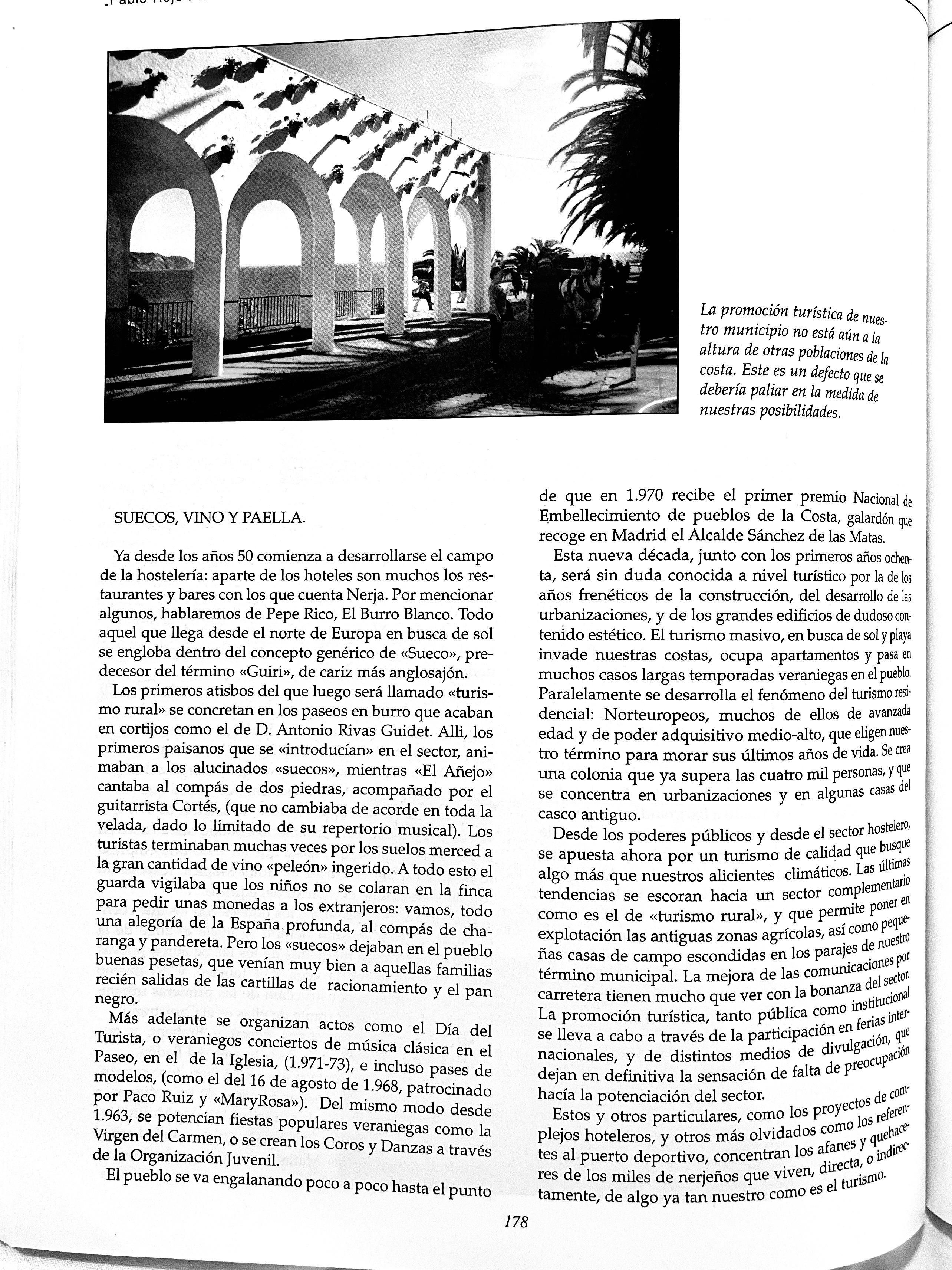
Swedes, wine, and paella
As early as the 1950s, the hotel industry began to develop in Nerja, and many restaurants and bars were already present. To name a few, we can mention Pepe Rico and El Burro Blanco. ( You can still go into Burro Blanco today and watch live flamenco on selected days). All those from northern Europe seeking sun were summarized under the generic term "sueco" ( meaning Swede), the predecessor to the term "guiri," which has a more Anglo-Saxon connotation.
The first steps towards what would later be called "rural tourism" materialized in donkey rides in Nerja that ended at various farms belonging to ( a man named) D. Antonio Rivas Guidet. There, locals could present their goods and services to tourists ("suecos"), while "El Añejo" sang, accompanied by the guitarist Cortés (who did not change chords all evening, given the limited musical repertoire). Tourists "crawled home" ( my interpretation of the text) due to the large amount of "peleón" wine consumed. Throughout all this, the "guard" ( I'm a bit unsure which guard this was) watched to ensure that children did not sneak onto the farm to beg for a little money from the foreigners: simply an allegory of profound Spanish culture, to the rhythm of music and tambourine.
The "Swedes" ( suecos) left plenty of pesetas in the village, which was very welcome for the families who had just left behind food rationing and "black bread."
Later, events such as Tourist Day or summer classical music concerts at the Paseo, by the church (1971-73), and even fashion shows (such as the one on August 16, 1968, sponsored by Paco Ruiz and "MaryRosa") were organized. Similarly, since 1963, summer folk festivals like Virgen del Carmen were promoted, or choirs and dance groups were created through the youth organization.
The town was successively adorned to the extent that in 1970, it was awarded the first National Prize for the beautification (or for having renovated and created something beautiful) of coastal villages ( el primer premio Nacional de Embellecimiento de pueblos de la Costa), a prize received in Madrid by Mayor Sánchez de las Matas.
This new decade, along with the first years of the 80s, will undoubtedly be known at the tourism level as years of extensive construction, development of residential areas, and the creation of large buildings with questionable aesthetic content. Mass tourism, those tourists seeking sun and beach, invaded our Spanish coasts, occupying apartments and in many cases spending long summer seasons in the village.
At the same time, the phenomenon of "residential tourism" developed: Northern Europeans, many of them a bit older and with purchasing power, chose our region to spend their final years. A "colony" was created, now consisting of over four thousand people, concentrated in certain residential areas and old town houses.
Public authorities and the hotel sector are now investing in high-quality tourism that seeks something more than just our climate. Recent trends include something called "rural tourism," which allows for the exploitation of old agricultural areas, as well as small country houses hidden within the municipality. The improvement of road communications has much to do with the sector's success.
The tourism sector struggles to participate in international fairs and be present in various media channels, hindering its growth. There are also other areas that could grow, such as the hotel industry or developing tourism around marinas for sports and excursions. This could be a good development for the thousands of nerjeños who live (directly or indirectly) from tourism.

Balcón de Europa 1932
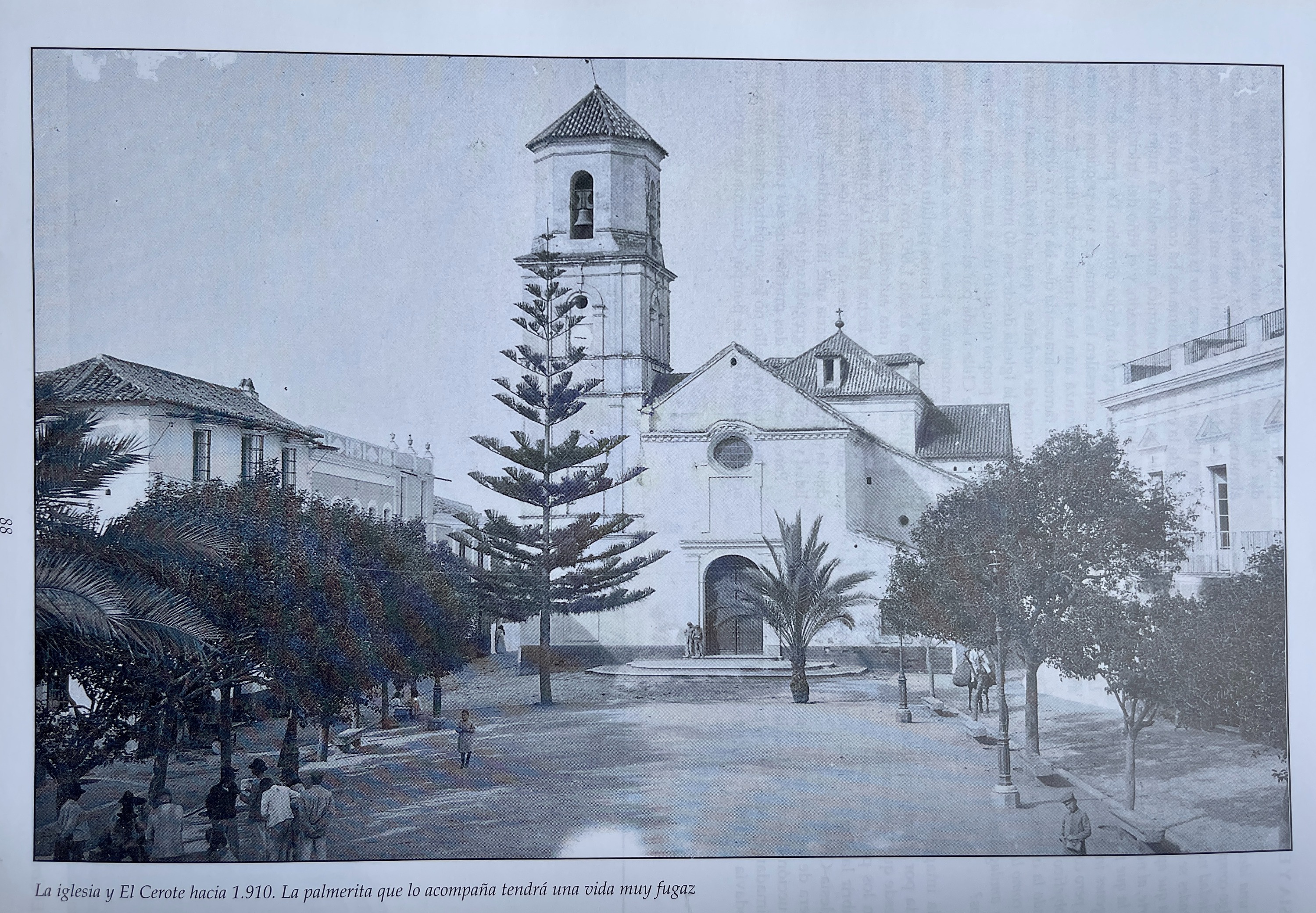
Church in Nerja 1910
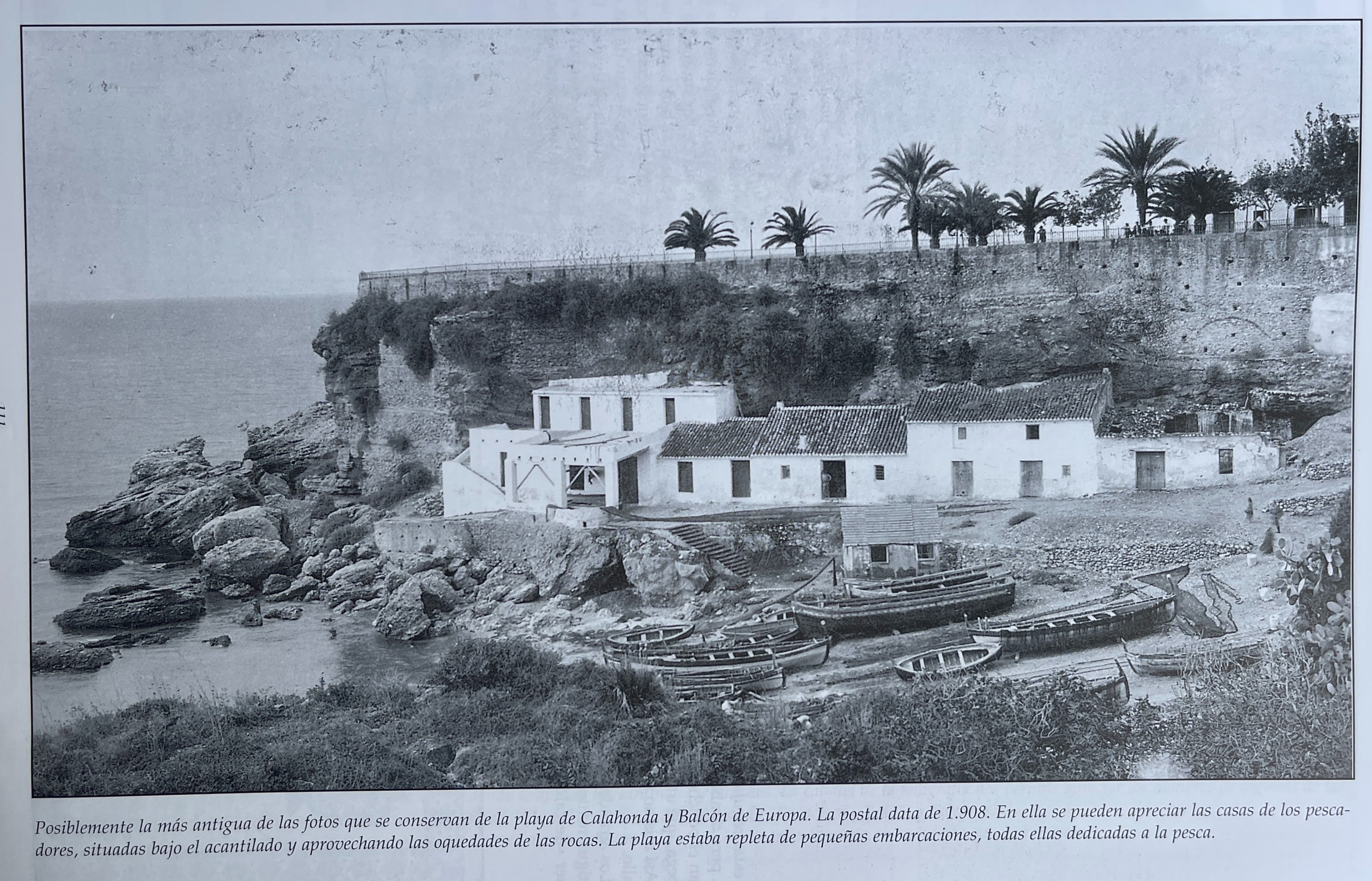
Playa Calahonda 1908
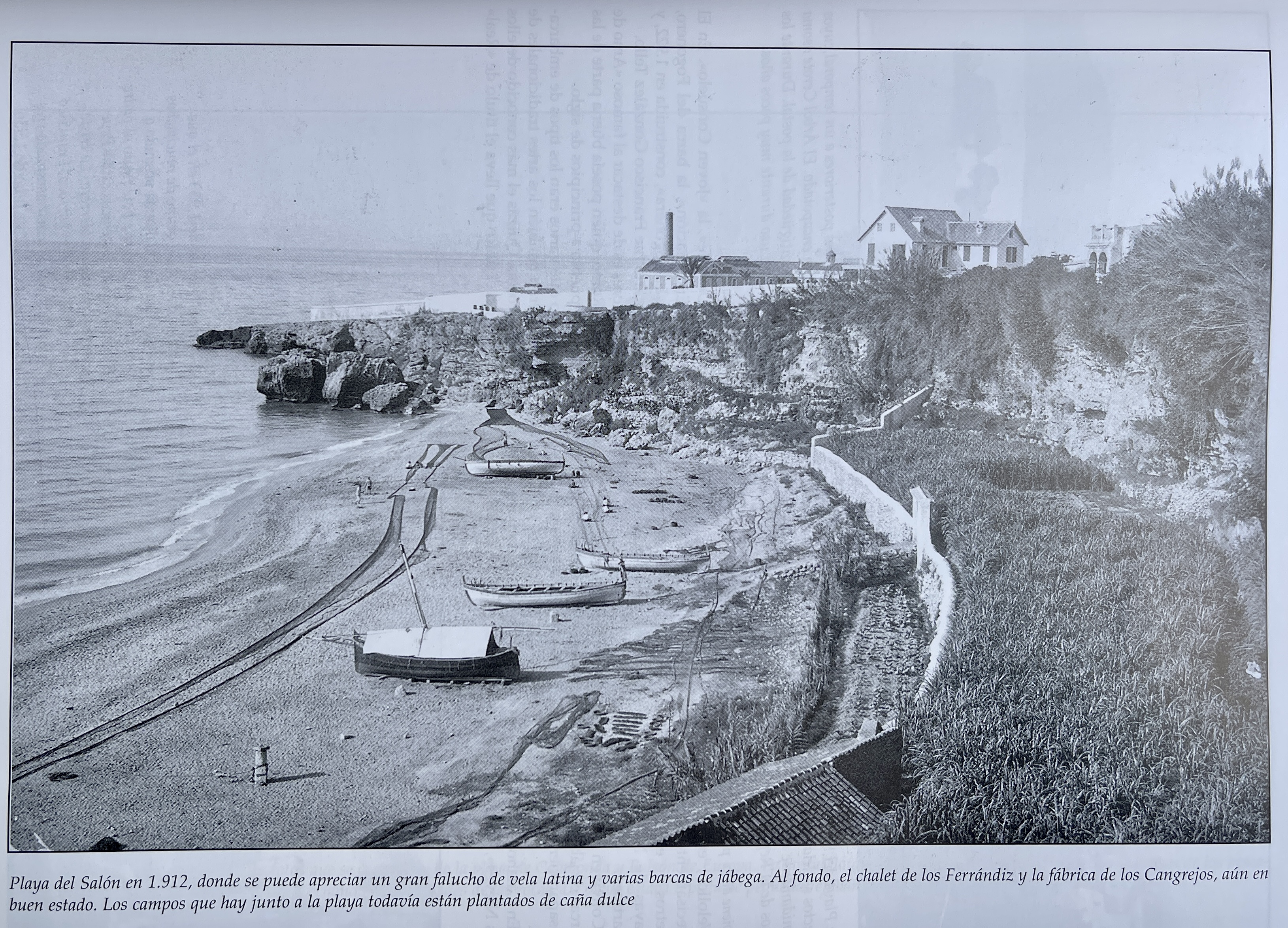
Playa Salón 1912