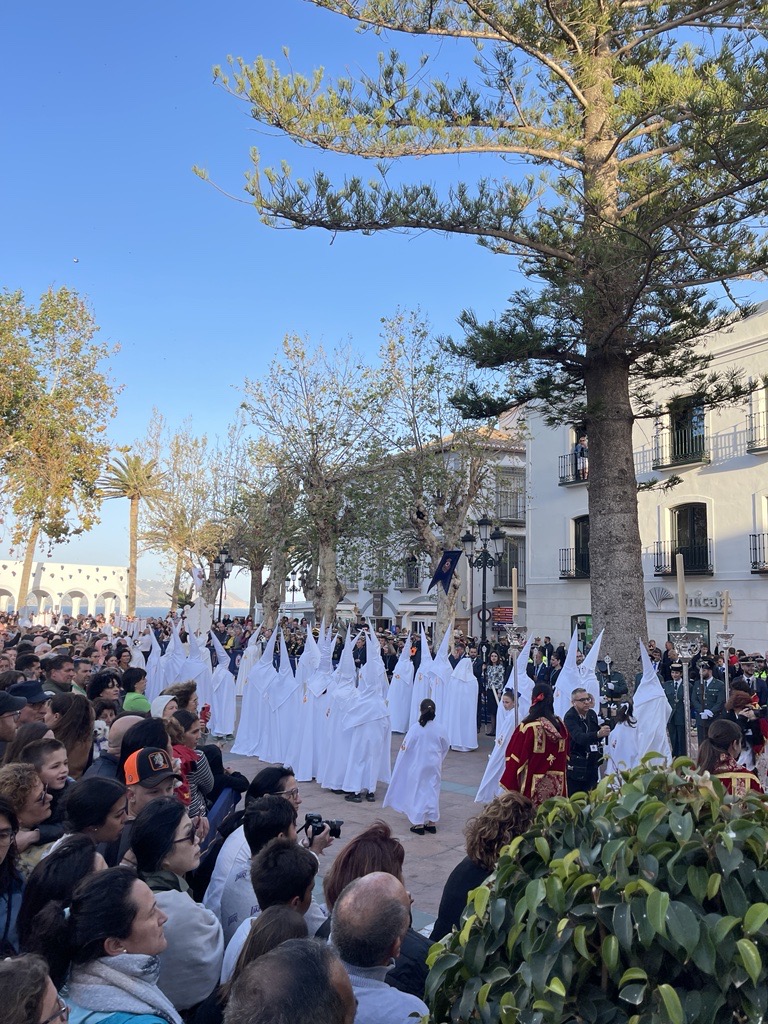
Easter in Spain is a big and important holiday where the entire week is celebrated in cities across the country. This Holy Week, Semana Santa in Spanish, is celebrated with statues of Jesus and Mary carried around in so-called "processions" or parades in the cities.
Nerja Easter Program 2025
Semana Santa, or Holy Week, is a religious holiday in Spain and is celebrated with processions and religious ceremonies.
What happens during Semana Santa in Nerja 2025
Sunday, April 13 – Palm Sunday
10:00 – Blessing of palm branches (San Miguel)
11:30 – Blessing of palms in Plaza de la Ermita
11:45 – Procession: c/Angustias, c/Pintada, c/Puerta del Mar, Paseo Balcón de Europa
12:00 & 19:00 – Masses in El Salvador
Tuesday, April 15
19:30 – Stations of the Cross (Via Crucis)
Route: Plaza de Andalucía, c/Barranquilla de Colombia, c/San Francisco
Wednesday, April 16
18:30 – Reception of the Legionnaires and flag homage (Plaza de España)
19:00 – Procession: Jesús Cautivo & María de los Desamparados
Route: Iglesia El Salvador, Balcón de Europa, c/Puerta del Mar, c/Pintada, c/Cervantes, c/Bronce, c/América, c/San Miguel, Plaza de la Ermita
21:30 – Station Reading & Meeting with the Legionnaires (c/Granada, Plaza Cavana, c/Carmen, Balcón de Europa)
23:30 – Conclusion in Iglesia El Salvador
Thursday, April 17 – Maundy Thursday
17:00 – Service in El Salvador
17:30 – Service in San Miguel
20:00 – Procession: Jesús Nazareno & María de la Esperanza
Route: Iglesia El Salvador, Paseo Balcón de Europa, Puerta del Mar, c/Pintada
22:30 – Retrieval of the “Cruz de las Ánimas” (Plaza Cantarero – Cementerio San Miguel)
23:30–00:00 – Songs along the way & conclusion in El Salvador
Friday, April 18 – Good Friday
12:00 – The Seven Last Words (San Miguel)
17:30 – Service in San Miguel
18:00 – Service in El Salvador
Procession: Santo Entierro (Burial of Christ) & María de los Dolores
Same route as Maundy Thursday
Saturday, April 19 – Holy Saturday
10:00–19:00 – Adoration of Christ in Ermita de las Angustias
19:00 – Easter Vigil in El Salvador
19:30 – Easter Vigil in San Miguel
20:00 – Flamenco show “El Sagrado Camino” (Cultural House Villa de Nerja)
Sunday, April 20 – Easter Sunday
10:30 – Masses in El Salvador and San Miguel
12:00 – Procession: Jesús Resucitado, María de la Asunción & Santa Cruz Gloriosa
Route: Iglesia El Salvador, Plaza Balcón de Europa, c/Puerta del Mar, c/Pintada, c/Arropieros, c/Huertos, c/Frigiliana, c/Carretas, c/Alfonso XII, c/Bronce, c/La Cruz, c/Pintada
15:00 – Conclusion in Iglesia El Salvador
19:00 – Evening Mass in El Salvador
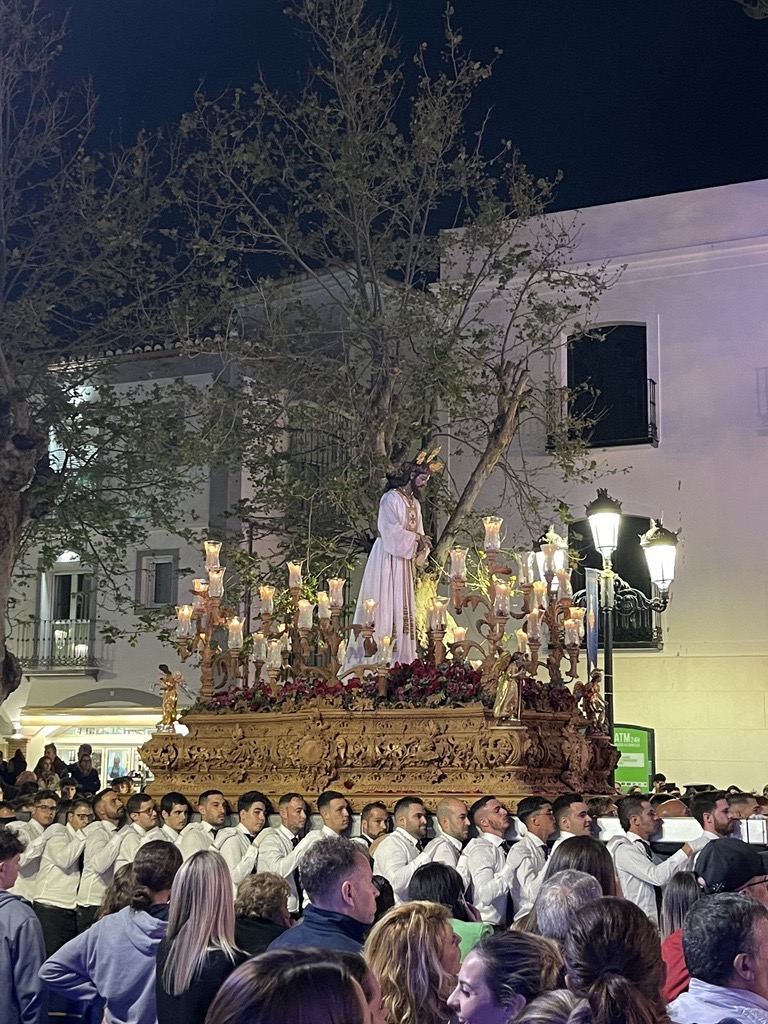
Despite religion playing an increasingly smaller role in the lives of many Spaniards, Easter continues to be a very large public display of Spain's religious roots with processions throughout the country. Each procession has its own meaning and atmosphere and is the culmination of much work by the various brotherhoods that play such an integral role as part of every town's celebration.
Easter in Málaga
One of the most famous and largest Easter celebrations and processions takes place in Málaga, just a 45-minute drive from Nerja, but Nerja's celebration is certainly nothing to sneeze at either.
More about Easter in Nerja
In Nerja, the 'Brotherhood of Jesus Christ of Nazareth' and the 'Brotherhood of Our Father Jesus and Holy Mary of the Helpless' are just two of the organizations that, along with others, take on important roles during one of the town's biggest annual festivals, by arranging processions of religious figures through Nerja's narrow streets. These events are deeply rooted in hundreds of years of tradition and combined with the strong Christian symbolism in each ritual, they create a very powerful atmosphere. The combination of the crowds lining each parade route, incense, music played by the municipal band, and the beautiful, narrow streets of Nerja make it a beautiful sight for all visitors while they are here and offer a side of this beautiful sea and sand town that you might not expect when planning your trip here.
Don't miss this during Easter in Nerja
If you want to celebrate Easter in Nerja, you must not miss the Resurrection Sunday procession that passes through Calle Carretas. This is a street in the old town, beyond the tourist crowds around Balcón de Europa, where residents line the narrow street with a red carpet and cover it with freshly picked herbs like oregano and thyme for the procession to pass over.
More about Easter in Spain…
Here is a brief overview of terms and information that will hopefully contribute to the Easter experience and give you an idea of what you are seeing when a procession passes.
-
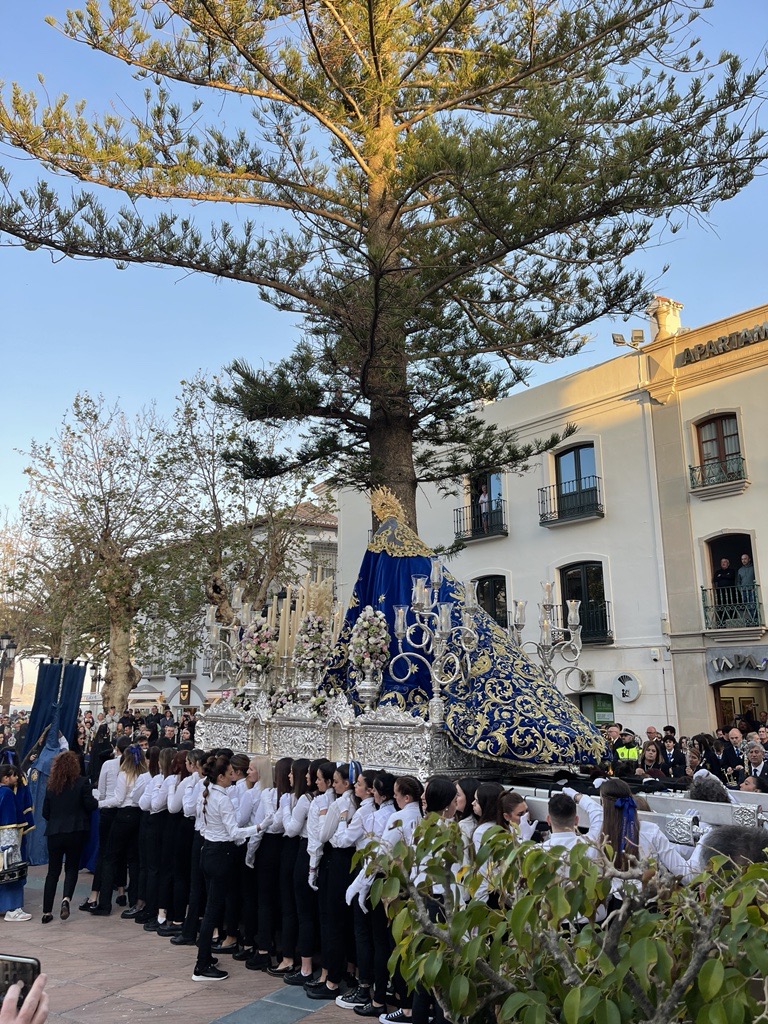
Tronos: The thrones are the heart of each procession and are called 'Tronos' in Spanish, which literally means 'throne'. Each event usually features two thrones, one for a statue of Jesus Christ and another for the Virgin Mary. Depending on the procession, these central pieces can be quite extravagant with fresh flowers and candles surrounding the idol. The thrones are very heavy; in large cities, they can weigh several tons, meaning they can only be carried for short distances before the bearers, who can number up to one hundred people, need to rest. You will also likely see spectators throwing flower petals over the thrones as they pass, especially during Easter Sunday parades.
-
Costaleros: These are members of the organizing brotherhood who carry the thrones through the streets. They are grouped in front of and behind the thrones as well as along the sides. Lifting and lowering are coordinated via a series of bell rings, and they typically wear clothing that matches the rest of the brotherhood's members. Sometimes, especially during the Easter Sunday procession, a blessing will be shouted out by an individual Costalero, to which the others will respond by shouting 'Viva, Viva, Viva!'
-
Cofradias: These are the brotherhoods that form an integral part of Easter. They own and maintain the statues and floats used during the festive period and organize the processions that take place. It is a significant honor to be part of one of the local brotherhoods (there are several), where membership is traditionally passed down from one family member to another.
-
Brass Band: This time of year is particularly busy for the municipal brass bands that participate in many processions. Each 'tron' is followed by its own musical escort, which allows bands from neighboring towns to participate. Nerja's celebrations often include organizations from Velez-Malaga.
-
Nazarenos: These are men, women, and children dressed in robes who precede the thrones and often carry a lantern or candle and sometimes walk barefoot. They walk in pairs with overseers known as 'Diputados de Tramo' who move among them to keep everyone organized. Nazarenos are often a little perplexing for visitors due to the pointed hat (Capirote) they wear, which is more commonly associated with the Ku Klux Klan (KKK), who adopted the costume early in the organization's history – unfortunately, the KKK stole their style from this religious tradition. The hood is meant to hide the faces of the Nazarenos and show their shame over the crucifixion.
-
Saeta: At pre-planned points along the procession's route, Saetas take place, a song from flamenco's "cante hondo" (deep song) genre sung by an older or particularly respected member of the village or town. In Nerja, one of these often takes place on Balcón de Europa and another halfway along Calle Pintada. These are often particularly moving parts of the procession and are well worth seeing.