
Updated December 1, 2025
Christmas in Nerja 2025/2026 will be bigger than ever, with a program spanning a whole month, filling the entire municipality with music, lights, traditions, and celebrations. Perfect for those who live here or plan to travel to Nerja over Christmas and New Year's!
Since 2015, we have come here almost every year during the Christmas break to celebrate Christmas in Nerja, a Spanish Christmas (where much continues until Epiphany), and New Year's. We stay until schools start again in Sweden. So wonderful to extend the entire Christmas celebration and get a few days of beach weather, sun, and Spanish culture. In the evenings in December and January, it's "jacket weather," but the days are usually sunny and wonderful!
Are you celebrating Christmas and/or New Year's in Nerja?
-
Yes, of course! See you there!
-
No, unfortunately not this year...
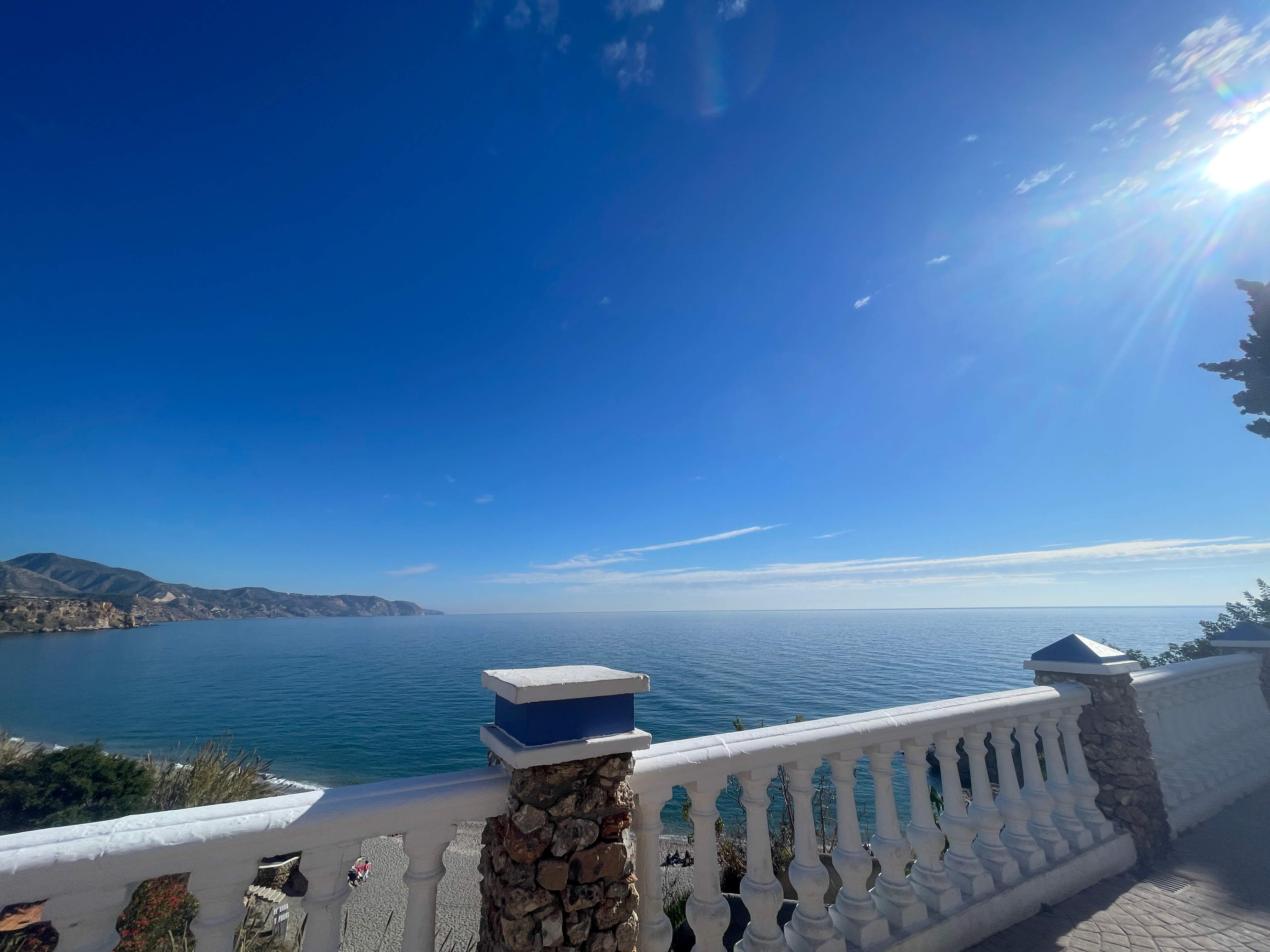
Picture over Burriana beach on January 30, 2023

The town hall and the entrance to Plaza Espana in December in the evening
Program for Christmas and New Year's in Nerja 2025/2026 (December 5 - January 6)
Over 120 activities from December 5 to January 6
A first look at this year's Christmas program in Nerja has finally arrived, and 2025/2026 looks set to be one of the most atmospheric and packed Christmas periods yet. Nerja's municipality, represented by Francisco Arce and Elena Gálvez (announced December 1) stated that this year's program will double and offer over 120 activities between December 5 and January 6.
Celebrations spread across the entire municipality of Nerja
Christmas celebrations will take place in central Nerja, Maro, and the areas of Los Poetas and Las Protegidas.
At Balcón de Europa and Plaza Espana, there will be festivities with Christmas decorations, activities for all ages, and various programs.
Please note that the main event for children is around Epiphany (not like in Sweden on December 24 when it's more of a family dinner), when they receive presents when the Three Wise Men, Los Reyes Magos, arrive. This means that even if you arrive in Nerja after Christmas Eve – there are still plenty of festivities left!
Inauguration on December 5, 2025 – Christmas lights and nativity scene lit
The Christmas celebrations kick off as early as December 5 with two much-anticipated traditions:
-
Inauguration of the municipal nativity scene (Belén Municipal)
-
Location: Tourist office at Plaza Espana
-
Time: 5:30 PM
-
-
Lighting of the Christmas lights in Nerja
-
Location: Plaza de España
-
Time: 6:30 PM
-
Other: This year's lighting is celebrated with a colorful parade.
-
Traditions
-
December 14: Rosario de Campanilleros A beautiful local tradition dedicated to María Santísima de los Desamparados.
-
December 19: Opening of the Christmas Park and Christmas Market
- Location: Plaza Espana
-
December 21: Belén Viviente (Living Nativity Scene)
- Location: Las Protegidas.
-
December 22 – Papá Noel (Santa Claus) visits Maro, a favorite among the younger ones!
- Maro
-
December 23 – Christmas Parade/Cabalgata in Nerja
- Nerja
New Year's Eve on Balcón de Europa - December 31
On December 31, Nerja invites you to a big New Year's Eve party. New Year's Eve is celebrated on Balcón de Europa with music, fireworks, and the traditional grape-eating at midnight – a perfect way to ring in the New Year by the Mediterranean Sea.
-
Location: Balcón de Europa
-
Time: Starts 11:30 PM
-
Other: Music, New Year's atmosphere, and the stroke of midnight with views over the Mediterranean
It's usually one of the biggest parties of the year in Nerja – open to everyone!
The Three Wise Men - January 5
The Christmas holiday concludes as usual with the traditional Cabalgata (parade) de los Reyes Magos (the Three Wise Men), one of the most beloved Spanish traditions. Perfect for families and a must for anyone who wants to experience authentic Andalusian Christmas culture.
On January 6, Spanish children get to open presents!
Exact program dates and times for larger parts of the activities will be published later.
Many restaurants offer special Christmas and New Year's menus – book well in advance if you want to eat out in the evening.
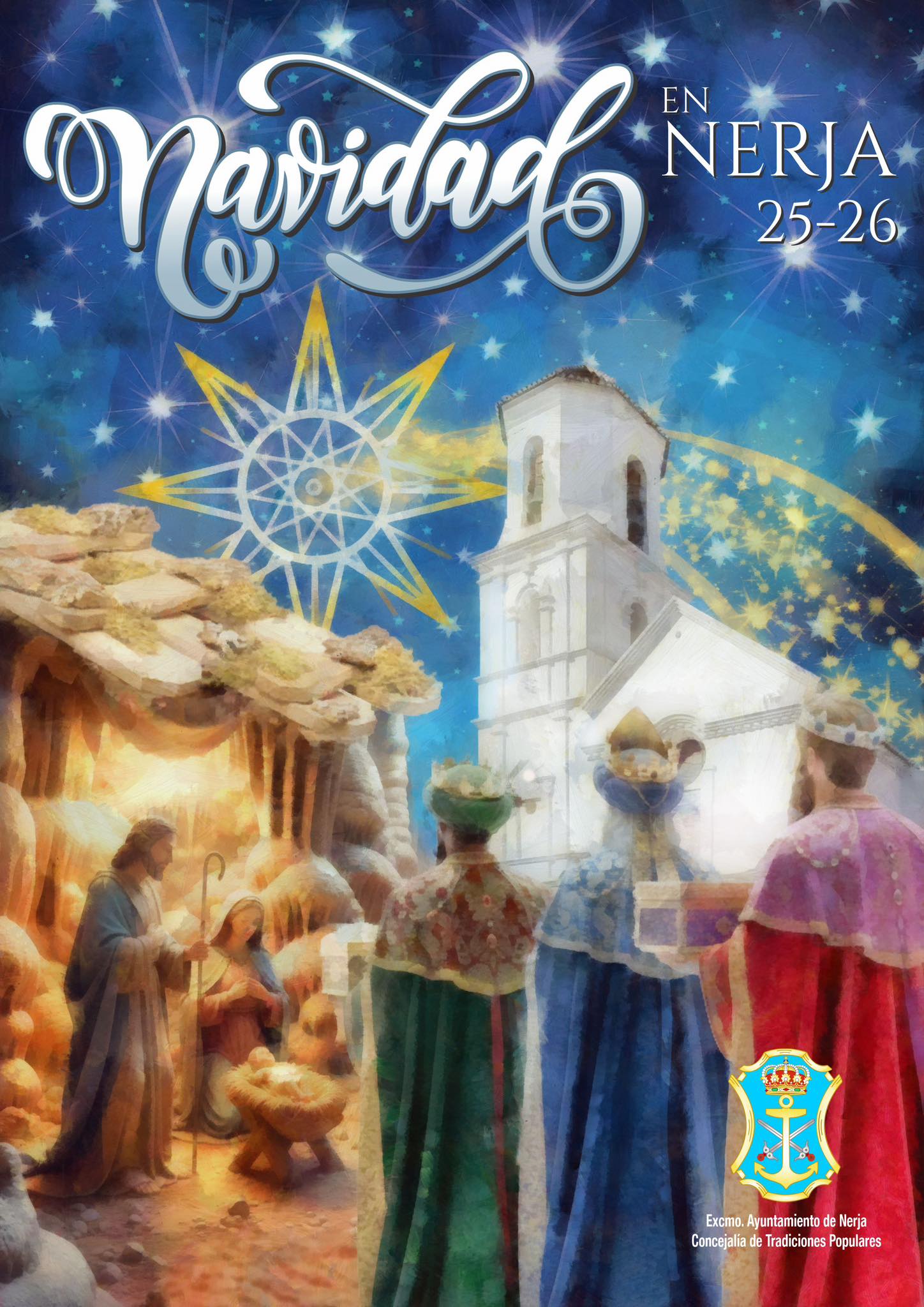
Pictures and tips for things to do at Christmas in Nerja
In early December, the tourist office sets up a wonderful nativity scene, worth stopping by to see in their large window during the Christmas celebration.
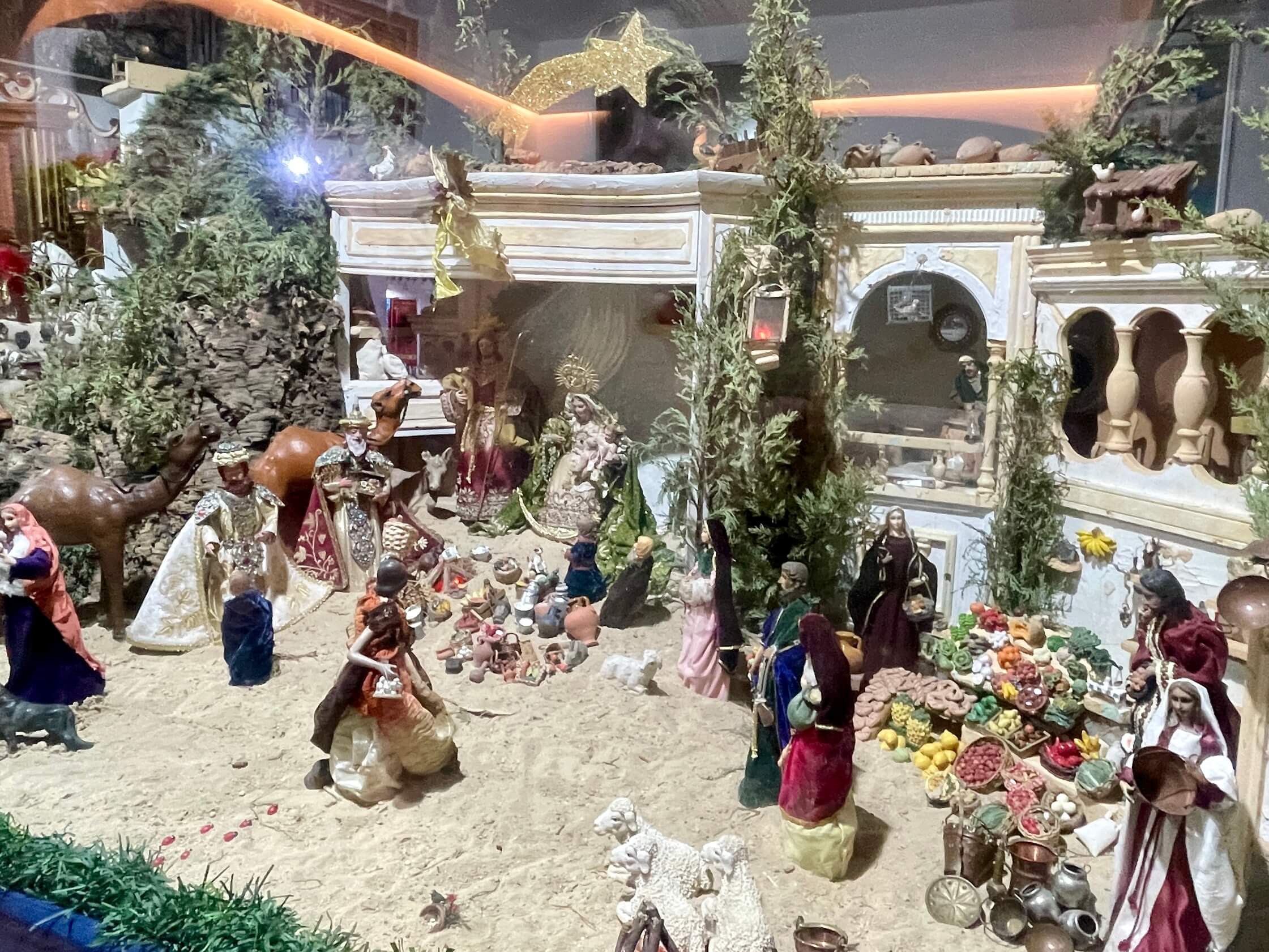
Nativity scene Nerja tourist office
Christmas lights on Balcón de Europa from previous years.
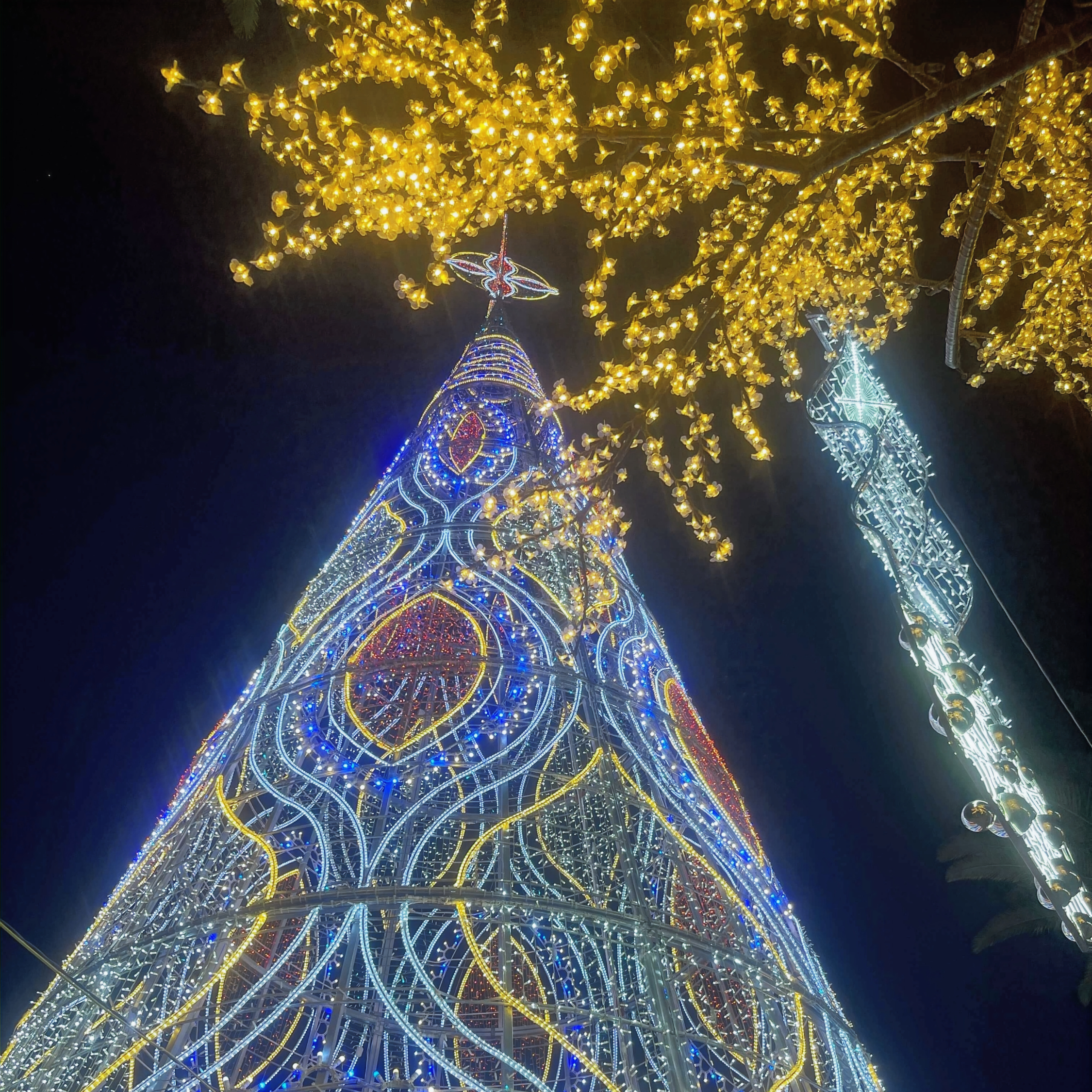
Picture of the large "Christmas tree" on Balcón de Europa in December
Christmas Park and Market at Plaza España, here children can jump in bouncy castles and buy cotton candy, and much more! Tip! Bring cash if you go to the "Christmas park" up on Plaza Espana. Attractions (for children) usually cost between 1-2 euros. In addition to children's attractions such as bouncy castles and a synthetic ice skating rink, there are sweets, cotton candy, and many other things to buy. On a certain day in December, the "royal postmen" arrive to take children's letters to the Three Wise Men. There are usually performances and long queues of children to see these royal postmen.
Nativity scene (with live actors) outside Nerja church (the first year we saw this, a small baby played the Baby Jesus — they really go all in).
Parade with Santa Claus (around December 23) around the streets and squares of Nerja.
New Year's party on Balcón de Europa. There are many people and drink service in the square, and more.
We have always loved taking the children to the Three Wise Men's parade on January 5, the day before Epiphany. Bring a small box or bag to collect candy in. The Three Wise Men have candy for the children, which they throw from their magnificent parade floats.
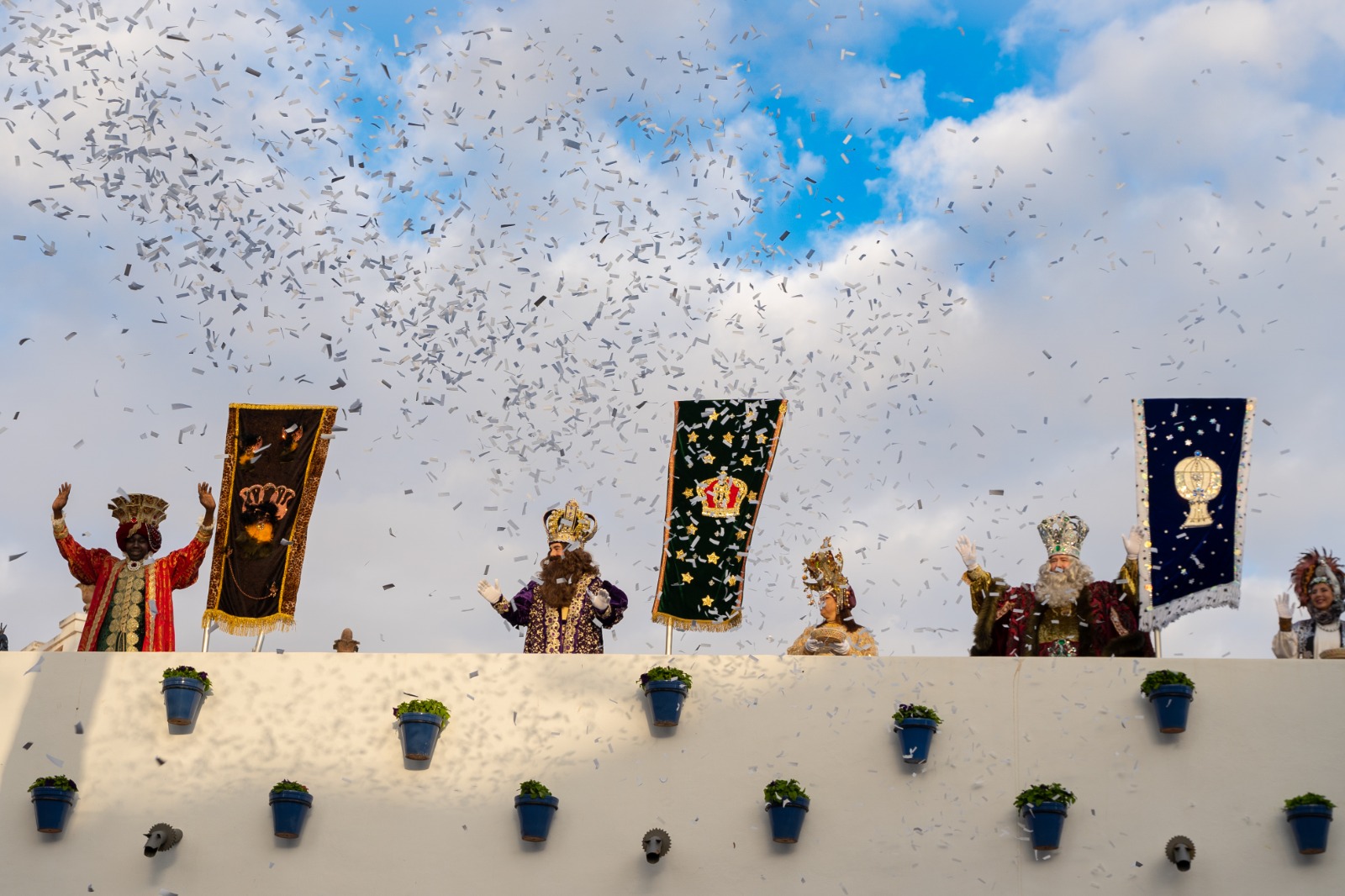
Photo from visitanerja.es
Traditions and important dates in Spain around Christmas
Christmas in Spain is a time full of traditions. If I were to compare it to how we celebrate in Sweden (I love Christmas), one could say that in Spain, Christmas is a much longer period where Christmas Eve is more family-centered, and Epiphany is more gift-centered.
December 8 – La Inmaculada Concepción
Christmas officially begins on December 8 with "La Inmaculada Concepción" (The Immaculate Conception). It is an important Catholic holiday and is celebrated especially in Seville, where "La Danza de los Seises" (the dance of the sixes, children's dance) is a tradition that fascinates many.
December 22 – La Lotería de Navidad
Spanish Christmas would not be the same without the great Christmas lottery, "El Gordo" (The Fat One). Almost everyone in the country participates, and the drawing is broadcast on TV and radio for several hours. El Gordo is a collective celebration, and those who win often share their winnings with family and friends.
December 24 – La Nochebuena
On Christmas Eve, families gather to have dinner together, often with a menu that varies depending on the region, but with classic elements such as lamb, ham, and fish dishes. It is a time for close family and friends to socialize, often with Christmas music in the background.
December 25 – La Navidad
Christmas Day is traditionally a calmer day in Spain and is celebrated with loved ones. Here, presents are often given to children, but many wait with the big gifts until the Three Wise Men arrive with presents on January 6.
December 31 – La Nochevieja
New Year's Eve in Spain is celebrated much like in Sweden, but a different and important tradition is to eat twelve grapes – one for each chime at midnight. If you manage to eat a grape for each chime without losing pace, it is said to bring good luck for the New Year.
January 5–6 – Los Reyes Magos (the Three Wise Men)
Christmas reaches its climax during the Epiphany celebration, when the Three Wise Men, "Los Reyes Magos," arrive and distribute gifts. On January 5, large parades, “Cabalgatas,” are held where the Wise Men throw candy to the children. On the morning of January 6, children open their Christmas presents.
Spanish Christmas Traditions and Symbols
Belén (Nativity Scene)
In almost every Spanish home and many public places, you will see "Belén," a detailed nativity scene depicting the birth of Jesus. Many nativity scenes are incredibly detailed and include small villages and characters like shepherds and animals.
La Misa del Gallo
Many Spaniards go to midnight mass on Christmas Eve, called "La Misa del Gallo." The name, which means "Rooster's Mass," comes from the legend that a rooster crowed on the night Jesus was born. It is a reverent ceremony that many participate in.
Turrón and Polvorones
Christmas sweets are a must! "Turrón" is an almond nougat that comes in different varieties – both soft and hard. Polvorones, small brittle cookies made with almond, are also popular.
We like Turrón very much but less so Polvorones :)